New Clients Special: $1 First Day of Daycare or First-Night Boarding!



Can Indoor-Only Cats Adjust to Staying at a Boarding Facility?
Indoor-only cats often feel most comfortable in familiar surroundings. They know where their food is kept, recognize household sounds, and follow routines that make their environment predictable. When travel, a family commitment, or home maintenance requires owners to be away, arranging cat boarding may raise questions about how well a cat accustomed to staying indoors will handle a new place.
The good news is that many indoor-only cats can adjust to a boarding facility when their individual needs are considered and the transition is managed thoughtfully. However, every cat responds differently to unfamiliar smells, sounds, people, and routines. For cat owners in Rialto, understanding how temperament, preparation, and the boarding environment influence adjustment can help make the experience more comfortable for their pets.
Valley Pet Hotel understands that cats need a setting where they can feel secure while their owners are away. Learning what to expect before a stay can help you prepare your indoor companion for a change in surroundings.
Why Indoor-Only Cats May Find Boarding Unfamiliar
Indoor-only cats usually become familiar with a limited range of sights, sounds, smells, and daily interactions. Their home provides predictable places to sleep, hide, eat, and use the litter box. A boarding facility introduces a different environment, even when the space is designed specifically for cats.
New scents, unfamiliar people, nearby animal sounds, and changes in feeding schedules may initially make some cats cautious. A cat might spend more time hiding, observe its surroundings from a distance, or show less interest in interaction during the first part of the stay.
These responses do not necessarily mean a cat cannot adjust. Some cats gradually become more comfortable once they recognize that their basic needs are being met. Others remain reserved throughout their stay but continue eating, drinking, and using the litter box normally.
The goal is not to make every cat outgoing or playful. A successful boarding experience means providing appropriate care while respecting the cat’s comfort level and allowing it to settle at its own pace.
How Your Cat’s Personality Influences Adjustment
A cat’s personality can be more important than whether it has ever visited a boarding facility. Confident cats that adapt easily to household changes may explore a new space sooner. Shy cats may need more time and quiet opportunities to observe their surroundings.
Cats that enjoy meeting visitors or investigating new objects may show curiosity during boarding. Cats that hide whenever strangers enter the home may find the transition more challenging. Previous experiences also matter. A cat that has stayed with a trusted caregiver or traveled comfortably may respond differently from one that rarely leaves home.
Consider how your cat behaves during ordinary changes. Does it recover quickly after visitors arrive? Does it become unsettled when furniture is moved? Does it hide in its favorite spot when unfamiliar noises occur?
These observations can help you discuss your cat’s needs with the boarding team. Share known fears, preferred interactions, and signs that indicate your cat wants space. Staff can use this information to approach your pet in a way that is less likely to increase stress.
Preparing Your Cat Before the Boarding Stay
Preparation can make the transition more manageable. Start by contacting the facility well before your planned departure to ask about its accommodation, daily routines, feeding arrangements, and care procedures. Explain that your cat lives indoors and may be unfamiliar with new environments.
If your cat uses a carrier only for veterinary visits, help it become familiar with the carrier at home. Leave it open in a comfortable room and place familiar bedding or treats inside if your cat is willing to approach. This allows the carrier to become a familiar resting place rather than an object that appears only before an unfamiliar journey.
Avoid introducing several major changes immediately before boarding. Maintaining familiar meal times and ordinary household routines can provide stability. If your cat has a favorite blanket or another suitable comfort item, ask whether the facility allows you to bring it.
Do not force your cat to explore the carrier or interact with unfamiliar people. Gradual, positive exposure is generally more helpful than rushing the process.
What Makes a Cat Boarding Environment Comfortable?
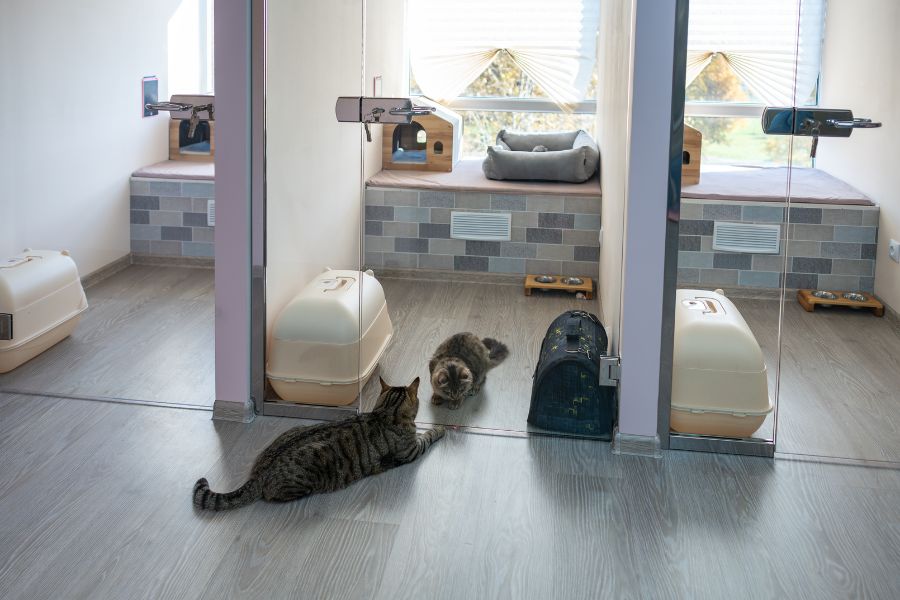
The environment itself plays an important role in helping an indoor-only cat settle. Cats benefit from a secure area where they can retreat from activity and observe without feeling exposed.
When evaluating cat boarding, ask whether feline accommodations are separated from dogs and how the facility manages noise. Find out whether cats have a private resting area, clean litter facilities, appropriate hiding opportunities, and enough room to move comfortably.
Cleanliness is important because cats may avoid a litter box that is dirty or unfamiliar. Ask how frequently litter areas are maintained and whether the facility can accommodate your cat’s usual litter preferences when possible.
Temperature control, ventilation, secure enclosures, and careful handling also contribute to a suitable environment. If your cat is especially sensitive to noise or contact, discuss how staff respond when a cat prefers to remain undisturbed.
A facility visit, when available, can help you understand the setting and ask questions before making arrangements. Look for clear procedures for feeding, monitoring, cleaning, and communicating concerns to owners.
Keeping Familiar Routines During Boarding
Routine helps cats understand what to expect. Although a boarding stay cannot reproduce every detail of home life, keeping important habits consistent may help reduce the disruption.
Provide clear feeding instructions, including the type of food, portion sizes, meal frequency, and any dietary restrictions. If your cat receives prescribed medication, explain the schedule and administration method before the stay begins. Provide the medication in its original packaging and follow the facility’s procedures.
Tell the staff about your cat’s litter habits, favorite resting positions, and typical interaction preferences. For example, some cats enjoy gentle attention after eating, while others prefer to sleep undisturbed for much of the day.
A familiar item carrying the household scent may also provide reassurance if the facility permits it. However, avoid bringing objects that could create a safety concern, such as loose strings or small pieces that your cat might swallow.
Consistency does not guarantee that a cat will avoid stress, but it gives the care team useful information for maintaining a familiar pattern.
Recognizing Signs That Your Cat Is Adjusting
Cats communicate comfort and discomfort through behavior, appetite, and normal daily habits. During the initial adjustment period, some cats may hide more than usual or show limited interest in exploring. They may also approach staff only when the surroundings become quiet.
More encouraging signs include eating, drinking, using the litter box, grooming, resting comfortably, and gradually showing curiosity about the environment. Some cats may accept gentle interaction, while others prefer observing from a sheltered spot.
It is important not to judge adjustment solely by how playful or affectionate a cat appears. A naturally reserved cat may remain quiet even when its needs are being met.
However, persistent refusal to eat, repeated vomiting, diarrhea, difficulty urinating, unusual breathing, or marked changes in behavior should be communicated to the appropriate care professional promptly. Cats with existing medical conditions may need additional monitoring, so share their health history and relevant veterinary instructions before the stay.
Ask the boarding team how it monitors appetite, litter box use, and behavior, and how it contacts owners if concerns arise.
Helping a Nervous Cat Feel More Secure
Some indoor-only cats need extra consideration because they become distressed by travel, unfamiliar people, or changes in routine. If your cat has a history of severe anxiety, discuss this with your veterinarian and the boarding facility before confirming a stay.
Your veterinarian can help assess whether the planned arrangement is appropriate and discuss ways to support your cat. Do not give calming medications or supplements without professional guidance, particularly if your cat has an underlying medical condition or takes other medication.
At the facility, gentle handling and patient observation are often more useful than repeated attempts to coax a nervous cat out of hiding. Giving the cat space to approach when ready can help it feel less pressured.
If your cat has previously struggled during boarding, consider discussing alternatives with your veterinarian, such as care in the home by a trusted person, when practical. The most suitable arrangement depends on your cat’s needs, health, and response to change.
Plan Your Cat’s Stay With Valley Pet Hotel
Indoor-only cats can often adapt to boarding, but their comfort depends on individual temperament, preparation, familiar routines, and the quality of care they receive. Taking time to discuss your cat’s habits and needs can help you make a more informed decision before traveling.
If you are considering cat boarding in Rialto, contact our team at Valley Pet Hotel to ask about feline accommodations, feeding routines, comfort items, monitoring, and care procedures. Explain any concerns about your cat’s experience with unfamiliar surroundings so you can determine whether the facility is a suitable fit. Planning ahead can help make your time away easier for you and more comfortable for your cat.
Frequently Asked Questions
Q1. Can a cat that has never left home adjust to a boarding facility?
Ans: Yes, many cats can adjust even if they have always lived indoors. The transition may take time, and each cat responds differently. Familiar routines, clear care instructions, and a quiet, secure environment can help support adjustment.
Q2. Should I bring my cat’s usual food to the boarding facility?
Ans: Ask the facility whether you can provide your cat’s regular food. Maintaining a familiar diet may reduce disruption and help staff monitor appetite. Provide clear instructions about portions, feeding times, and dietary requirements.
Q3. Will my cat hide throughout the boarding stay?
Ans: Some cats hide more when they encounter unfamiliar surroundings. This may lessen as they become comfortable, although naturally shy cats may remain reserved. The care team should monitor eating, drinking, litter box use, and other signs of well-being.
Q4. What should I tell the boarding staff about my indoor-only cat?
Ans: Share your cat’s feeding routine, medical history, medications, litter preferences, personality, fears, and preferred handling style. Explain any previous difficulties with travel or unfamiliar environments so the team can plan appropriate care.
Q5. How can I tell whether boarding is suitable for my nervous cat?
Ans: Consider how your cat responds to travel, visitors, and changes in routine, and discuss any significant anxiety with your veterinarian. Ask the facility about its environment and monitoring procedures before deciding whether boarding or another care arrangement is more appropriate.